



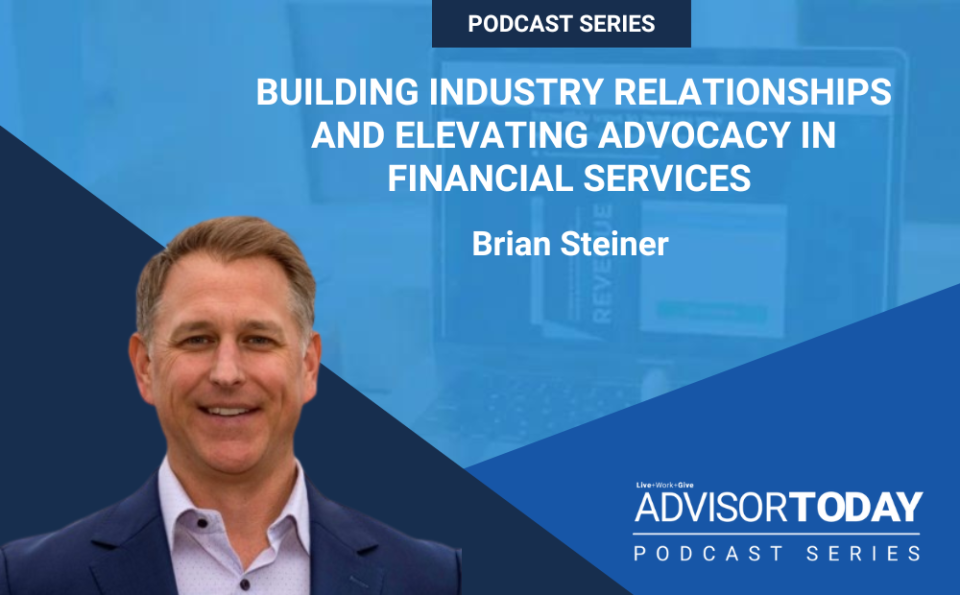
Brian Steiner is the Executive Director of Life Happens, where he is responsible for fostering partner relations and engagement at NAIFA. These organizations are committed to promoting financial literacy and supporting insurance and financial advisors. Under his leadership, Life Happens has successfully distributed over $4 million in scholarships and collaborates on the widely recognized research report, the Insurance Barometer. This partnership underscores its significant influence on both industry professionals and consumers alike.







Here’s a glimpse of what you’ll learn:
- [02:42] Brian Steiner’s dual leadership role at NAIFA and Life Happens
- [04:36] How NAIFA builds deep, powerful industry relationships
- [06:08] Top associations NAIFA partners with for industry impact
- [09:21] Brian’s career journey from advisor to industry executive
- [13:42] How Life Happens uses real stories to inspire financial protection
- [22:07] The emotional impact of the Life Lessons’ scholarship program
- [26:39] Insider details on the Life Insurance Awareness Month celebrity campaigns
- [31:15] How Brian’s unique perspective bridges field, management, and association
- [35:35] Why investments-focused advisors should join NAIFA today
In this episode…
The financial services industry thrives on relationships, collaboration, and trust. But what does it take to build partnerships that truly strengthen advocacy and elevate the profession as a whole? Beyond selling policies and managing portfolios, how can advisors and leaders work together to create meaningful, lasting change that benefits both clients and colleagues?
According to Brian Steiner, a respected leader in financial services advocacy, the answer lies in deep collaboration and consistent engagement across the industry. He explains that forming strong partnerships with organizations like LIMRA, ACLI, and IRI has allowed for greater influence in policy, education, and consumer protection efforts. Brian highlights that these alliances not only enhance NAIFA’s impact but also ensure that agents, advisors, and carriers are aligned in advancing the profession.
In this episode of Advisor Today, Chris Gandy and John D. Richardson sit down with Brian Steiner, Executive Director of Life Happens, to discuss how building industry relationships fuels advocacy in financial services. They explore NAIFA’s collaborations with leading associations, the evolving role of advisors in a changing marketplace, and how Life Happens continues to educate and inspire through storytelling.
Resources mentioned in this episode:
- Chris Gandy on LinkedIn
- John D. Richardson on LinkedIn
- Zack Huels: LinkedIn | Email
- NAIFA
- Brian Steiner on LinkedIn
- Life Happens
- Life Insurance Awareness Month (LIAM)
- Life Happens Scholarship Program
- Life Happens Real Life Stories Program
- Life Insurance Marketing and Research Association (LIMRA)
- American Council of Life Insurers (ACLI)
- Insured Retirement Institute (IRI)
- Women in Financial Services (WIFS)
- Living a Life of Significance by Joseph W. Jordan
Quotable Moments:
- “When you come to events like this, having that rich relationship with LIMRA helps not just open doors but formulate real connections.”
- “Finding folks that are comfortable to be on camera and share, that can be an intimidating thing to do.”
- “Just because you work at an insurance company, you're not necessarily on the front lines like you and Chris.”
- “People don't realize the impact that their voice can have, but your voice can really be heard.”
- “If you show up, you're going to learn something and be a little better at what you do.”
Action Steps:
- Strengthen industry relationships through collaboration: Building partnerships with organizations like LIMRA and ACLI expands advocacy reach and amplifies collective influence.
- Share client impact stories with Life Happens: Contributing real-life stories helps educate consumers on the value of protection and inspires financial preparedness.
- Engage in grassroots advocacy: Participating in NAIFA’s policy initiatives ensures advisors’ voices shape legislation that protects clients and strengthens the profession.
- Connect with new industry segments: Developing relationships with RIAs, broker-dealers, and other financial groups fosters unity and broadens professional opportunities.
- Mentor and recruit within your network: Encouraging peers to join NAIFA and engage in industry efforts creates a stronger, more resilient advisor community.
Sponsor for this episode...
This episode is brought to you by the National Association of Insurance and Financial Advisors, or NAIFA, the #1 association for producers in financial services.
At NAIFA, we enhance professional skills, promote ethical conduct, and advocate for legislative and regulatory environments.
By joining NAIFA, you gain access to a partnership that elevates your performance while providing greater purpose to your professional work. NAIFA members are happier, make more money, and stay in the business longer.
Get in touch with NAIFA and learn more about how to join NAIFA by visiting NAIFA.org.
EPISODE TRANCRIPT
Intro: 00:02
Welcome to NAIFA’s Advisor Today podcast series, where we focus on how financial advisors work, live and give to their local communities and our greater financial services industry. Now let's get started with the show.
Chris Gandy: 00:20
Welcome everybody to Advisor Today, the podcast where we bring the best and the brightest to a platform near you. Right. The Advisor Today podcast for NAIFA. We're super excited with my co-host today JDR how are you, JDR? looking sharp.
John D. Richardson: 00:39
Thanks, Chris. It's always a pleasure to work with you.
Chris Gandy: 00:41
Yeah I'm super excited to see you and thanks for being here and bringing a great spirit. Many of you know, we've we've kind of revamped the podcast for the purpose of continuity and growth. And so we're looking for new and talented people to talk a little bit about that today of how you can participate and be a part of our podcast. Zack Huels behind the scenes. Do we have a sponsor for today's Zack or we're going to get right to it.
Zack Huels: 01:10
Let's get right to it.
Chris Gandy: 01:11
Let's get right to it. With no further ado, I want to make an introduction. Many of you know him. Many of you like him. Many of you have heard from him.
And many of you see him on screen might have seen him on stage. He is the guy with the sharpest suits. The second, sharpest suits in NAIFA. But Mr. Brian Steiner. Brian, how are you?
Brian Steiner: 01:31
I'm doing great, Chris. Good afternoon. And you're using best and brightest loosely. I'm just happy to be hanging with both you and Jay today.
Chris Gandy: 01:40
You know, it's good to see you. I asked you to come on today to discuss some things that maybe our partners out there who are listening to us might not either a be aware of or b how they can help us. So this podcast is a 2 to 2 pieces. One is we're going to do a little bit of an ask some education and awareness and then lean into some opportunities that exist. And so I appreciate you participating and giving us a little bit of your time today.
Brian Steiner: 02:11
Oh, absolutely. It's great to be here. And I just I'm a I'm in a hotel. I'm on the road as we speak at a corporate event. So I am joining live from a hotel room.
So I apologize for the the backdrop. I'm not trying to invite too many people into into my bedroom, but I am on the road today.
Chris Gandy: 02:29
So, Mr. Brian Steiner, can you tell us a little bit about what you do within the NAIFA family? Just to kind of clarify, like in a 32nd kind of commercial of what you do and your day to day work?
Brian Steiner: 02:42
Sure, absolutely. I, I'm fortunate to wear two different hats, although the lines do cross a little bit for the responsibilities. I oversee all of our partner relations and partner engagement on the traditional NAIFA side of the aisle, and then with the integration of Life Happens into the family. I am responsible overseeing Life Happens as the executive director in all of the good creative work that the Life Happens team has been doing for, gosh, almost over 30 years now. But to have that as part of our collection of resources, if you will, it is pretty powerful.
And with them comes a great team to work with. So both require a lot of touch points with senior leadership of a lot of our carrier companies that we're all familiar with or all work with over the years, and maintaining and developing those relationships to make sure that we're getting the appropriate support to help grease the wheels and be able to deliver on those campaigns and the advocacy, and hopefully provide resources and engagement downstream through our members and future members.
Chris Gandy: 03:50
So, Mr. Steiner, let's talk about one of the main reasons I brought you here is to discuss the important, the importance of corporate relationships. So you're on the road and there's a lot of organization. We'll talk about being on the road and kind of the importance of having a favorable introduction. But can you highlight a little bit of the associations or organizations in which we go to with the idea that we're going to be able to build relationships, industry, relationships, but we'll be able to cross over into meeting people through those relationships. You mentioned you're at you're currently at Limra.
Brian Steiner: 04:36
I'm an annual conference here in Orlando at the Gaylord. So also with Kevin Mayer, who's not on screen. He's downstairs hopefully networking and shaking some hands and kissing some babies. But yeah, Limra has been one of those organizations that, you know, has had a strong working relationship with and their leadership for a long time, but the collaboration with Limra really is very deep. From Life Happens, there is a very, very successful industry report called the Insurance Barometer, which off of Limmer's site, I believe out of all the work Limra does, it's their number one downloaded research report and that is been done in conjunction with Life Happens for the last 15 years.
So we're co-sponsors. In fact, it was one of Life Happens team members Maggie Lewis who took the concept to to to Limra, you know, a decade and a half ago. And it's through those types of collaborations that make obviously just our standing in the industry impactful. But when you come to events like this, you know, having that rich relationship with Limra, the organization helps, you know, obviously not just open doors but formulate real connections. And then ultimately a lot of our partner firms that we're all very familiar with their senior leadership participate in organizations like this and and make meeting and connecting, you know, a lot easier.
Chris Gandy: 06:02
But you have and give us some other ones that you might attend and and.
Brian Steiner: 06:08
And I'll give a testament to, to, to yourself and our other board members and and John, we've, we've done a really great job over the last number of years. And Diane Boyle gets a special shout out for that with the what she does on the government relations side for NAIFA. Our coordination with groups like the ACLU, the American Council of Life Insurers, Acli, their members are the companies themselves. And our collaboration is obviously NAIFA being the grassroots, we're the the agent advisor association. How that pairs so beautifully when we go to Capitol Hill or in our state based initiatives being coordinated in lockstep and having a strong dynamic relationship with them.
And I, you know, that has always been a healthy relationship. But I would say that over the last 5 or 6 years, you know, kind of even going back to like the last iteration of doll, things have really elevated in our collaboration with them, really driving from a GR side of things. And again, their members, their board members are the C-suite, typically of the of the carrier companies. And it puts us in a strong working relationship visibility and what our work that we're doing from a grassroots perspective, it's it makes its way upstream through the ACL, ACL ranks, which has been which has been pretty impactful. We also maintain really strong relationships with groups like IRI, the Insured Retirement Institute, which is also based in Northern Virginia, and their leadership, they've got some great folks there more representative from the annuity or the annuity space where Ackley focuses more does on the annuity side.
But I would say their focal point more is in the fundamental life piece. And then there's a number of other organizations like. And you know, some of our sister association groups like Women in Financial Services and some of the other more minority based associations that we have had long standing relationships with, and we try to to do a really good job collectively to support each other's events and activities and be as strong resources as best we can for each other, because I think in the end, our goals are pretty similar in helping protect consumers. And I think, you know, through those collaborations, we can be, you know, really impactful.
John D. Richardson: 08:35
Brian, you've mentioned a lot of letters. And I remember 20 years ago, in 2005 when I got in the business, I remember taking a limb or a test online on how well or how successful I'm going to be in this business. And then NAIFA was the next grouping of letters that I discovered on my journey as a as a financial planner. So my question for you is, as we all know, our story matters. What's your story?
Where did you come from and how? Because you're what you're doing now is pretty amazing, and we're grateful that you're at that C-suite level, rubbing elbows, doing life with some pretty amazing people in different organizations and companies. But if somebody were like, Who's Brian? Where did he come from and how was he? What were the steps that he took to be where you are today?
If you don't mind, take a few minutes and share that with us. That'd be great.
Brian Steiner: 09:21
Sure. Well, you know, and I started my career out of college in as an advisor. So I actually was hired in with a group in Richmond, Virginia, through the securian, then Minnesota Life Network. And I wasn't a member to back in those days, which I think we were. A lot of the companies were a lot more predisposed to be like, all right, you passed your licensing.
Here's your app. We've all heard that story before from folks. So I was part of NAIFA Richmond back in the day. You know, I kind of got led astray a little bit. And one of my regrets, you know, not necessarily in hindsight.
Everything has a great, you know, weird way of working out. But I did transition out of financial services, actually, even after I got past the hard years, which was, you know, maybe a little shortsighted at the time, and maybe I didn't necessarily see the forest for the trees, but I got into software selling and worked with a London based software company that was in risk management compliance and was very active. I ran our US sales team for a number of years, a number of years here, and through that time in my professional life, I actually met Kevin Mayo. So Kevin was one of the leaders of North America for his previous association, the Institute of Internal auditors and nothing says like crazy party when you get groups of auditors together. But we had connected.
And then when he came on board with NAIFA and I believe 2015, there was not how NAIFA was structured corporately. I don't know that there was a true business development function, and he identified kind of a need from a corporate relations perspective. So he reached out and connected or and asked to see if I was was interested in in making a transition and coming on board into the association side of things. And it's not to say that was something that I envisioned as part of my professional path, but I had always truly regretted transitioning out, and this was a really interesting way to re-engage, albeit from a different side, but really kind of get back in the fold. So I, you know, fantastic career decision, I believe, and have been able to work with a lot of great people that have been incredibly successful in the space.
And through that role. It really was a great segue in meeting with, again with our corporate partners through NAIFA. You know, who you get to meet with to raise money typically, is the is the senior leadership of these organizations. And to be able to be in that room and, and tell the story has been incredibly rewarding and powerful and hopefully feel like we've done a pretty good job at it. And yeah, and then obviously with the the integration of Life Happens and FSP into the NAIFA family, it provided some additional opportunities to, to to get involved and spread some wings.
And I had a lot of admiration for the Life Happens leadership and team just working closely with them long before there was a merger, especially on this event circuit, like being at Limerick today, the past leadership, we always had a close working relationship. We were big supporters and as an organization the Life Happens. And then there was a point in time to where so many of NAIFAs US past presidents transitioned or spent time as the chair, the volunteer chair of Life Happens. And so there's just a really long, strong working relationship and history there. And there's an opportunity to kind of also engage and be part of that story.
It was a it was an easy. Yes. So it's maybe a little more background than you might have wanted, John. But you know.
John D. Richardson: 13:12
No, no, it was perfect. No. Again folks see you and they want to know who is that guy. And so I appreciate you being transparent and.
Brian Steiner: 13:20
Asking for money.
John D. Richardson: 13:22
Yeah. No, I love it. Well, you know, you just you brought up Life Happens, which I know about. Life Happens. But we may have folks who are listening or watching this podcast that may not know exactly what who is Life Happens or what or what.
What do they do? And, and specifically talk about the scholarship or talk about the videos talk about and how they can engage in that. If you don't mind, that'd be great.
Brian Steiner: 13:42
Sure, absolutely. Yeah. I mean, Life Happens. History predates all of us by a lot. Life Happens is a a nonprofit that is the mission is to educate consumers on the importance of protection products really rooted in life insurance.
Happy Life Insurance Awareness Month, by the way, as we're in the middle of we're right in the middle of it in September here. And and if anyone's on LinkedIn or spending time on social and watching all of you know, individuals, posts and companies post, so many people reference Liam. And that is an initiative that is rooted and started by Life Happens. So it goes back to 1994, its inception, and has really evolved to not just talk about life insurance, but disability, long term care, annuities, basic financial literacy. And that creative team has been In creating marketing resources, stories, real life stories, and working with folks like yourself and Chris and their in your clients who maybe have had a life event and we're able to do full production around that story.
And I think we can all agree, you know, in this industry, it's not always easy talking about getting sick, dying and getting hurt. And it's it's often a conversation that people need prompted to have, which also is a testament to all the good work that you guys do because, you know, people don't usually just go online. I mean, some do, but you'd be like, I'm going to buy life insurance today. There's usually someone behind the scenes that's kind of help helping them get there to make that decision and make an educated one. And Life Happens, is there to help prompt them through stories and and different marketing resources to get people to think differently and hopefully pick up the phone and call folks like yourself to put the right resources in place.
John D. Richardson: 15:35
Yeah, I was early an hour before we got on the air. I briefly mentioned to you that I did watch the new video, but yeah, the Pleasants family, if you don't mind kind of sharing, they're a little bit of their story. And then behind the scenes, perhaps there was Connor, whose man is he? A gift to Life Happens in the video.
Brian Steiner: 15:51
We got a great we got a great resource. I mean, Connor's fantastic behind the camera, much like Zack today. I know helping with this podcast. The creative team at Life Happens. Phenomenal.
They are a wealth of resources. They're very, very talented folks that have been doing a lot of great things for a long time. Yeah, and the real life story program, the Pleasants family, which we just we just released a few weeks ago, I guess, on the on the front end of of Life Insurance Awareness Month, lovely family in the state of Washington, had worked with the New York Life agent and doing their planning and unfortunately the the dad, the husband who was a firefighter. And as the story tees up, you do think that he he ends up passing away and obviously, you know, being a firefighter, the first thing is, oh, it was a in a, in a in fighting a fire. But he did he did pass.
He had a heart attack at the fire station. And you know young family, young children. And you know, not to say that anything can make that circumstance easier for the family emotionally, but knowing that they had taken action and done some proper planning, it alleviates at least some of that financial concern for them to hopefully allow them to to grieve properly, not worry about house or school or paying the bills and, you know, being able to adjust to what their new situation looks like and move forward in a really positive way. So, you know, kudos to the New York Life Advisor and the family and the and taking action and the good work. But yeah, it's a very compelling story.
And we're always not that we, you know, hearing those stories, I think help people take action. And not that we want to hear those stories, but identifying them and being able and having finding people that are willing to share them can be really, really powerful. So for those listening, we're always looking to, you know, if people have a voice that they want to share and a story that wants to be told, we're always looking to to continue to build out that library. And so if you have folks or yourselves are willing to to share more, I think it can be pretty powerful in a lot of ways for the family, for the agent, and obviously for the folks on the other end that get to to to hear and hopefully take action and do some proper planning for themselves. I know, Chris, you were part of one last year, so not to I know I'm the one that's being asked questions, but happy to throw it back to Mr. Gandhi to to maybe share a little bit about his experience in that process.
John D. Richardson: 18:35
So the when looking at the the process beginning of process to get a person from because we've all been there. If you've been in the business longer than a year or two, you've perhaps you've delivered a check, you know, and that's what makes the difference when it comes to our industry versus others. We're actually delivering money at a time when it when it matters. That being said, we have perhaps we all have different stories. How do we engage?
What's the where do we go to website and then what's kind of that process. So that from an expectation standpoint, if I lost a client, it's a tremendous story. I think it's a good story. What's what I guess. What kind of stories, what's the process?
Question one and the follow up question is what stories are you still looking for? Are there states? Are there types of protection solutions that perhaps that Life Happens is looking for? We've got plenty of these kind of stories. We're looking for that kind of story.
Do you mind unpacking that a little bit?
Brian Steiner: 19:28
Sure. No, absolutely. And I'm going to answer it as best I can because I don't have my. We are not to not to be specifically targeted towards certain states, but as we, you know, with Life Happens integrated now into Nepa, a lot of those stories can be impactful in our our government relations and advocacy work at all levels. And I know in coordinated in with Ashley too, we have aggregated a lot of our content by state.
So that if those resources need to be tapped for those purposes, they're organized appropriately. So there are states and I don't know offhand exactly which ones we are currently targeting, but sourcing stories at a high level seems like it shouldn't be that difficult. Obviously, we've got a vast network of members, and unfortunately life events happen all the time, but finding folks that are comfortable to be on camera and share, that can be an intimidating thing to do, especially if, you know, depending, you know, that's just maybe not a comfortable thing for everybody to do. And then ultimately, depending who you're the carrier was in many instances, there are some compliance review things that have to happen in coordination with them for the companies to be to sign off. And most do, but things do happen and come up and it just depends on, you know, there's there's some nuances from company to company, but we've got a lot of great partners out there that are usually enthusiastic.
And when we do create them, you know, Life Happens, tries to create things that are evergreen that can be used across a broad base of, of outlets. But then ultimately for the underwriting companies, we do special edits and things that are specific to that organization for them to use internally, that maybe Life Happens branded, but also corporately branded. You can submit stories to Life Happens. Org, the website. And then ultimately, I know the NAIFA family is a close knit group.
So it's, you know, happy to have just people reach out to us directly or to, you know, leaders like yourself or chapter leaders to say, hey, I might have something or at least want to talk through it. We've got a team that can, you know, be available and and have those conversations.
John D. Richardson: 21:40
I love it. Now, the good news about the Life Happens stories is that people get to see firsthand the impact of of having proper protection in place or having, whether it's life insurance or disability insurance or long term care or or or you get the idea. However, there are situations where people pass and they're not prepared, and I believe that's why Life Happens has a scholarship program. Do you mind unpacking that and talking about all the details regarding that?
Brian Steiner: 22:07
If you want to get into the real emotion side of this business, being part of that process, that that'll do it for you. Life Happens has a scholarship program called Life Lessons. Hopefully many of the listeners have seen I know we've been, you know, at industry events throughout the years. There have been a lot of student recipients of scholarships that have participated at chapter events, at national events, at other industry events over the years. So it's a very well-established program that is directed to rising students that lost parents that did not have insurance coverage.
And what impact that had on them and their families and their circumstances. And this year, during the application process, I believe we received over 1300 applicants, which that's a lot of that. I mean, it's and when you go through those and you read their submissions and listen to their videos, it is a you want to help everybody. You desperately want to help everybody. But ultimately resources in our instance are, you know, are what they are.
And, you know, we were able to issue I think this year it's going to be over 40 scholarships. But that process Us. We have a village of volunteers that go through, and essentially each application is reviewed 4 or 5 times and vetted and then narrowed down. And then depending on who, a lot of our corporate partners are very involved in those programs. And then we submit, you know, kind of that.
Consolidated applicant pool to select companies for them to review. It's a really cool a lot of them make it part of their corporate process. So some of our, you know, like a Pacific life and a number of others, they bring a lot of their employees and colleagues together to review and make it part of their internal process. Because I think, too, you know, just because you work at an insurance company, you're not necessarily on the front lines like you and Chris. And sometimes you can get lost on what the power of the industry and impact you can have on people's lives.
And I know that there's been a lot of really positive feedback on how those organizations have got their people involved in helping make the selection, and then those scholarships awarded to those students. And many times they're brought into the corporate offices for meet and greets. Maybe they're willing to speak. A lot of times those kids also end up in the industry or have internships and things. So it's a really, really powerful program.
We'll have distributed, I believe, over $4 million in scholarships since its inception. And I'm really, really excited with now again, being part of NAIFA and not to take away from any of the charitable or philanthropic work that our chapters across the country do. But if there's room in the if there's room to add another, I mean, how awesome would it be for each of our chapters from our states to be able to, you know, distribute a scholarship every year? Like if we're offering a scholar, you know, just from our chapters, in addition to what the companies do to support, but I think that could just be a great unifier. I feel good, I think it could be a great way for NAIFA to be, you know, better vested in some of the community aspects more than they are now.
And I think it could be a really strong thing from a testament to the good work that we're all doing, to have that as an elevated component to what our chapters are up to. So if you're listening, you'll probably hear from me soon about spreading our wings on that. But it's it's part of our collective vision here and hopefully we can map that out.
John D. Richardson: 25:49
So if a person wanted to, let's say they've been blessed by this business and they want to pay it forward, they want to plant a seed that grows into a tree that provides shade that they'll never enjoy, but they want to make a difference. Can they write a check to the to Life Happens? And if so, what's the means? By doing so.
Brian Steiner: 26:09
Much like where you can find a lot of our resources, lifehappens.org. There's a link there to the scholarship program and you can donate directly from that site.
John D. Richardson: 26:18
Very good. And by the way, one last thing on Life Happens or or learn life insurance awareness month. You're. I know you're a celebrity and I get it. You know, you're a good looking dude and all, but didn't didn't.
Life insurance awareness month didn't we used to have celebrities in the month of September. What happened to that and what's what's the vision of where we're going? And I'd love to get some input on that, if you don't mind.
Brian Steiner: 26:39
No. Happy to share. Yeah. There was a long history of celebrities. I guess maybe me coming on board.
I screwed it up. No, we know there have been folk. Danica Patrick, Brooke Shields, Roselyn Sanchez, a number of professional athletes going back to like Boomer Esiason. No, there were a lot of great representatives of Life Happens. You know, it's it's it's interesting because it's not to say that we won't get back to doing that.
You know, it's kind of a mixed review because when you work celebrities, obviously the folks that were selected in the past had some sort of tie or life event that made them relevant, but in some instances, things, you know, it's not to say that a celebrity makes you want to buy or act to get life insurance. But they are helpful in helping get eyeballs and, you know, media and attention, which ultimately is the goal in promotion. But over the last couple years, we've pivoted so much. I think it's it's higher now. But with our collaboration with Limra, it's not just kind of the millennial Gen Z, the younger generations that are going onto social platforms for financial information.
It's like 7 in 10 people now. So that's your baby boomers and all the like that are on social. They're on Facebook, they're on Instagram. And there are a lot of folks out there that, you know, maybe good resources, maybe not. But we saw an opportunity from Life Happens to be that trusted voice in those spaces.
And it's not to say that the carrier companies aren't active on those platforms, but they're insurance companies. They're, you know, a little bit more risk averse in most instances, or maybe not comfortable being on TikTok, at least not yet. And that's an opportunity for life. Happens to meet consumers where they are. And we've doubled down our efforts and our resources through social and working with different influencers that it allows us.
It has allowed us to be more targeted who and when and what we're positioning. So, you know, if we have an initiative where we want to target parents, young parents, we can work with influencers that fit that demographic, or people in alternative lifestyle or different demographics or geographics that allows us to be a lot more targeted. And it's really resonated with the companies. And, you know, for Life Happens. And for two, you know, we're subsidized by members, but also corporate support and trying to fill those appropriate gaps and be the right resource for them is paramount.
And we found some a lot of success in in positioning our resources that way in lieu of a singular spokesperson. So probably more of a robust answer than you're looking for there. But you know, we'll find some more. Chris, I'm sure you have some athlete friends we could dial up.
Chris Gandy: 29:29
I do. I'm back. I, I had a power. They're doing some construction in our suite, and they totally took us out.
Brian Steiner: 29:38
You're. You're lucky. This is a flexible group. And, you know, your partner in crime. He just kept rolling, like.
Like.
Chris Gandy: 29:44
No, no, listen, listen, listen. You could have put a what do they call that, a flat? Flat something flat something where they basically have a picture. You have a picture of you, and it's like just a cutout.
Brian Steiner: 29:57
Oh, just a cutout. So it looks like you're.
Chris Gandy: 29:59
Yeah, it's like a flat Rob or something like that. We'll have to get one of those, Zack. Or I could just. You could just set it up, put a microphone in front of it, and it's like me, like smiling like this. Something like that.
It's like.
Zack Huels: 30:09
Yeah, we'll get you a soundboard too, with all your top sayings.
Chris Gandy: 30:13
Right. So that'd be that'd be that'd be hilarious. Hey, so I've been listening because I've been able to kind of just just make sure that my bandwidth was super low. Yeah. You know, Steiner, you've you've you've toured the world, though most people don't know that.
You haven't always been a guy. Right. So you were a guy you were in. Tell us your journey though, because I think it's so interesting because most people think of NAIFA employees or NAIFA partners or NAIFA alignment. They don't realize the world you've been in.
So you've been on the producer side?
Brian Steiner: 30:52
Yeah.
Chris Gandy: 30:53
You've been on the field management and leadership side, and you've also been on the association side. So can you tell us not just tell us the story because the story is what it is, but what did you learn from being on different sides of those those those obstacles. Sure.
Brian Steiner: 31:15
Well and and and I'll and I'll not to pivot. GDR did a great job when you were cut out. We did talk a little bit about this, so I'll spare the super detailed version of my journey. But the, the unique thing for me is, much like you guys, super involved, obviously from a volunteer perspective on the board. And let's not kid ourselves, whether you're a leader at the state level or the local level or the national level, there's a significant commitment of time and efforts and things that you guys provide out of your business to give to the industry.
Obviously, me being on the the staff side, but having been in the field, I do think it lends an interesting perspective because I sat in your chair in the past, I've delivered death benefits, I've sold insurance, I've managed money, I've, you know, been involved in long term care claims like I've been in it, and I think that helps. I don't I don't want to say this definitively. And I don't it just, I think I might be the only staff member that's been in production. So I think it helps me. I think I can be a good sounding board.
It's not to say that by any stretch, I have all the answers and I haven't been in the business active in a little while. But when it comes to NAIFA creating resources or education or designation program or whatever it may be, or an event. I think I like to think of myself as a fairly good sounding board for like, yeah, that would resonate. Yeah. You don't realize, hey, companies have a ton of trainings and a ton of programs and what they offer and like what we're competing with and like, I think I can lend a good perspective there especially.
Yeah. And I and I didn't really get into me being in kind of the management side of the industry to us, which was a great experience. And, you know, really positioned me in working with Carriers Direct and the downline with the with the some pretty established agents and advisors in the space. So, yeah, I think it's an interesting perspective. I think it allows me to kind of bridge the gap and talk both to the corporate side of things, but then also really kind of understanding your challenges from a day to day and then understanding the resources that groups like NAIFA and Life Happens and our collective voice have, like how that could plug in again.
And I'm not super old, I'm not young either. But like, I feel like I can kind of connect the right dots to, you know, some of the elder statesmen of our industry, but then also kind of help be relevant voice to the next gen, too.
Chris Gandy: 33:58
So, Steiner, I've realized a couple of things, though, since you've, you know, since you're not overly young and not overly old. The one thing that we have had challenges on is the relationships traditionally that we've had and has had, has been in the insurance and the insurance space.
Brian Steiner: 34:25
Sure.
Chris Gandy: 34:26
Right. And the realization that I am a registered rep. JDR As a registered rep. Is that the business of of helping people make smart financial decisions has evolved.
So how are we or what? Let me ask a real question. There's two parts to this question. One, the listeners that are on here, how can they help us bring in or establish relationships with Ria and broker dealer firms that's one two is identify associations similar to like LIMRA and organizations like that. That's true.
And three why would here's a lay up question for you, Mr. Stanger. Don't blow this one. Why would someone want to be part of an insurance association if I'm doing investments? So those are the that's a kind of a three part question. So you want me to repeat it in that order?
I can do that.
Brian Steiner: 35:35
No. And you're exactly right. I mean and I and I'd reference to like selling being part of, you know, placing protection, getting sick, dying and getting hurt are tough, tough conversations to have a lot of people that come into this business and and maybe to be fair, I'll even point to myself and my own experiences. You know, managing money can be the sexy part, right? You know, you got your management.
I mean, people need guidance there, too. And there are a number of people that the insurance component is a part of their portfolio in those early years as they try to accumulate assets and then once they have accumulated assets, maybe they've positioned insured or placed insurance to their clients, you know, in those stages. But now they're more focused on on the wealth management side of things compared to compared to the protection side of things, which, you know, again, I think it's always important to to kind of be able to do to focus on both. But I think the money management side, you know, can be the sexier side and people get in the space, whether they join a, you know, a Morgan Stanley or, you know, Merrill type concept, as opposed to coming in with more of a mutual or a career agency type model. The, you know, the paths can be a little different.
I think that NAIFA to be fair, I know this this may not be the softball response you're looking for, but, you know, NAIFA changed its name a number of years ago, back in the late 90s from nellu to Nepa, which is insurance and financial advisors. And, you know, one of the things that, you know, Brock Jolly, who we all know, he's always like, hey, like, we gotta remember we are financial advisors, too, not just rooted in protection. And sometimes we need to be cognizant of that and maybe some of our programs and how we present ourselves. I think from a government relations perspective, NAIFA does such an such an incredible job of protecting both sides of the aisle. And I think that's the part of the narrative that we probably need to do a better job of telling that story, because the work that we're doing on Capitol Hill and the state Houses has just as much impact in those areas than they do on the left side.
And, you know, I know that's a lot of those internal conversations and how we position that better. And I think we're starting to do a better job. There are some other organizations out there That, you know, stem more from the broker dealer side, whether they're independent broker dealers or insurance based broker dealers. And sometimes there's ultimately some confusion where those organizations are really there to tend to and support the broker dealer. Not necessarily the advisor, but the advisor kind of gets lumped in.
And from an advocacy perspective, you know, again, working with CLE in the carrier side, we're simpatico and lockstep most of the time. But their concern is the carrier nifrs concern is the agent and advisor. And that's the story that gets lost. Where, yeah, you may think you're tied in there, but in actuality, they're doing what's in their best interest, not necessarily yours. And and then to get back to it, hey, if your aspiration is to manage money, great.
Come on aboard, because it's still that protection element is still going to be a component of your portfolio. And if you need if you're going to if you're going to do it, you should learn to do it well. Build out your centers of influence, work with some really great people. And in the end, if that's not where you want to focus your business, you've got this incredible network of people, a rich community where you can refer and and develop some great additional resources and outlets to, to push business and vice versa, because it's not just managing money or selling life insurance. I mean, think about like the Medicare marketplace.
I guarantee every single one of you starting to get pounded with like, Medicare questions because of, you know, where the aging population that we have and knowing what to do with that, that's not someone. I mean, that's probably not your day to day space, and you probably don't want it to be. But a place like NAIFA is a great place where you can connect the dots, develop those resources. And I think, you know, develop those specialists to help make your practice more robust, make you more of an indispensable resource to the client. And and you can have a good place to kind of refer that work and, and build your build your business.
Chris Gandy: 40:12
You know, Steiner, that's that's a great point. You know, we can't drive forward. Looking backwards in the future is ahead of us. And so our ability to be able to adapt.
Brian Steiner: 40:25
Yeah.
Chris Gandy: 40:25
And the ability for us to be nimble enough to embrace a space that we have might have not have been founded on. But it's where financial services is going. And obviously, you know, JR can speak a little more about it from his side. But from my side for myself and the advisors that I mentor, teach and also work with me, it's important for them to to be open to the conversation of why risk management is a significant part of someone's portfolio. But at the same time, we can't negate the fact that investments is one of the things that people want to talk about, because it is one of the most attractive things for them to talk about.
It's the, you know, the soundbites are on, you know, mad money. They turn on TV like yelling at the screen. You know, they do. They do those type of things. And and so that's what gets the clicks.
How do you make a, how do you make money. Right. And so you know risk management doesn't always get the clicks. And so at the end of the day when people say what association I got $1. What association should I join.
They might not say NAIFA is the place I should join, right? Because they're like, you know, I have this one over here, or this one over here, or this one over here, and I can't divide all three. So perhaps NAIFA thinks outside of the box And lives outside the box, where we build relationships with the Investment Association of America, and we build relationships where there is a way for people to have continuity of both. And maybe that maybe that makes sense for us as an association as we continue to grow.
John D. Richardson: 42:12
JD yeah, I was going to say it looks like we're coming up towards the end. It's Chris, are you ready for lightning Round with our our guest? Oh.
Chris Gandy: 42:23
I don't want to ask any Steiner any questions like that. You ask Steiner questions like that. You never know what you're going to get so well.
Brian Steiner: 42:29
That this would be coming to be blind to. Because I've got. No. I don't know what you'd be. I have no idea what's.
John D. Richardson: 42:37
I'll give you. I'll give you a softball to start off with if you're ready. So so Gandhi talked about legends in our industry. And Joe Jordan is a legend. John Newton Russell award winning, wrote a book about life of significant significance, not success, because a lot of advisors look at themselves and look how successful I've been.
And it's not about success, it's about significance. What kind of impact have you had? That's it. That's the book right there.
Brian Steiner: 42:59
I've been I've traveled with Joe recently. I've got one of those too.
John D. Richardson: 43:03
Yes. Okay. So my question for you is you're gonna I don't know if you've written a book, but if you wrote a book about your story, Brian Steiner's story. Okay. What would the story what would your book be titled?
And if they were to make it into a movie, what actor would play you? You can pick any actor you want, so bring it what you got.
Brian Steiner: 43:22
All right, so I'll do a you know, there's actor Josh Lucas. He was in like, Sweet Home. And now I'm going to like, do rom com stuff. He was in like Sweet Home Alabama and he was in Ford v Ferrari. He was one of the execs I don't know he's been around.
So I think I've been told I there's some similarity in our look. So I'll go with him. If I was what would it be. You know, I've made some career changes. And and then recently to gotten involved in some, some some endurance activities.
Sports competitions. And I think, you know, even more than, than a movie that but like a podcast, if I was going to do a podcast, I think it would be called Starting Somewhere where it's just that initial like first step and like, you know, whether it's making a transition in your career or a significant life change or something where people are often afraid to kind of like make that move, but like, there's so many powerful stories out there of, like, you know, how that, you know, you were doing this and then all of a sudden you're, you know, have a successful like what happened? It's like, but all about where, where you got started. Just like taking that leap of faith, jumping in the deep end of the pool. So I would say that hopefully that doesn't give away my podcast idea where there isn't actually a podcast right now called Starting Somewhere that someone then in fact starts.
So maybe I should take action and do it.
Chris Gandy: 44:51
GDR was you. Did you? Did you say that was a softball question? Did you?
John D. Richardson: 44:54
Yeah, man, I got. I got some heat if you want heat. That was. That was my easy one.
Chris Gandy: 44:58
That was. That was like. That was like the ninth inning coming down. I do I really tough question man. It's like what's your favorite food bro.
Like what do you like.
Brian Steiner: 45:07
Oh that's I can answer that one too.
Chris Gandy: 45:09
Go ahead.
Brian Steiner: 45:12
I mean I'm the the law is I'm a I'm a I'm a late night cheeseburger eater. I'm a I love a delicious cheeseburger. In fact, at a NAIFA board meeting. Some of the rumblings of me eating cheeseburgers on the road where I've been like, we've been in Vegas for events and then, like, it's way too late. And then I run into somebody and they're like, there's Steiner sitting by himself eating a cheeseburger at a NAIFA board dinner a couple years ago, Keith Gillies, when he was on the board as a joke when everyone brought, was brought appetizers.
I was brought my own like double cheeseburger at like a very like nice restaurant as my appetizer. I didn't order it. It was part, you know. So. But I do love a cheeseburger.
Chris Gandy: 46:01
Wow. Okay. Go ahead. I have I have one more.
John D. Richardson: 46:04
Yeah. So, man, I see I want to be nice to you now because Gandhi just called me out, and I thought I was being generous and do.
Brian Steiner: 46:12
Whatever you want.
John D. Richardson: 46:14
So far away.
John D. Richardson: 46:16
Hey. So I asked this question of my closest friends, and I consider you a close friend. So you. You, this. Today's your last day.
Good Lord's calling you home. And you got one day to make it matter. What are you going to do with your your your final day and and how do you want to be remembered?
Brian Steiner: 46:34
Ooh. That's a you know, I flew I was late to the Limerick conference. Not to get too sappy. My father passed away not too long ago, and we just did a celebration of life this past weekend, so I actually spoke and prepared remarks for that, that talked, you know, not about what my last day would look like, my last day I would spend with my wife and my children, my two daughters, Rose and Grace. We probably go on a daddy daughter date. And however whatever they wanted to get up to, I would probably just fall in line and spend my day with them, whatever that would be.
As far as what I would want to be remembered for. You know, someone who did that, someone that did what they said they'd do. But, you know, I like to think of myself as a pretty lively, loud. I say loud like personality. But, you know, someone that helped bring the best out in people, you know, make people feel good.
Someone that, you know, kind of cared. So I don't know. It is a tough one. Not that that's the ninth inning one.
Chris Gandy: 47:45
You got the eighth inning before you even get the seventh inning stretch. I mean, you got eighth inning. You got ninth inning. Yeah. Steiner, your most memorable moment in this industry so far.
Brian Steiner: 47:58
From which side is a producer or from the side?
Chris Gandy: 48:03
Say both. It's your world. We just.
Brian Steiner: 48:06
No, I had I had a I had one of my first clients again coming out of school and you know, you don't know what to do. You're, you know, you don't know which way is up. You're just in survival mode. But I had I worked with a woman her. About a month after she came on as a client, her mother died.
She thought after that happened and the inheritance and things in the in the in the challenges that she was just going through that estate process like that process, she thought it would be really important because I was not mature enough to have asked. But she thought it was important for me to get introduced to her children in that process, which we did, and developed a good relationship with a fairly quickly a good relationship with them. Three months after that introduction, the the mother died. So the grandma died. The mother was the client.
The grandma died, then the mother died. And then I was we were again. What, given the extreme circumstances, positioned to make sure that everyone was taken care of in that process? So that was a pretty impactful moment for someone really just getting started. And it's something that kind of stuck with me.
And after I transitioned away from the space, was one of the you know, when I look back and say, can I wish I would have stuck it out longer? I often reflect back on that and the impact that we had in working with that family on the professional, on the on the association side, I would say just a powerful moment. And this is going to be, I think, something that all the listeners and you guys, hopefully, if you have experience and if you haven't, you need to. When I came on board with NAIFA and I did my first visits to Capitol Hill, and that was a really that was wild because it just it's so many levels. One, your voice is heard and just that access that, you know, if you've not been privy to it or educated on, it can seem like a distant like, oh yeah, like I'm going to go meet with, you know, just go meet with Senator.
So and so you're like, okay, I'm so disconnected from that reality. Like, how does that happen? And then realizing that the mechanism to do it is right there in front of you and then having the accessibility, having that, those intimate conversation type moments where, oh yeah, your voice not just in financial services, but like your voice can really be heard And then seeing kind of the collective push of all the NAIFA folks painting the Hill made you say, you know what? What we're doing makes a ton of sense and matters. And I don't know, that really resonated and stuck with me.
And when I talk to companies and when I talk to individuals about NAIFA, I often point to that because people don't realize the impact that their voice can have. But then the other side of it, and I and I'm saying this now as an afterthought, because I'm not a producing agent anymore. And going back and being able to leverage that with your clients and prospects about, you know, I was meeting with, you know, representatives talking about your business or how this can impact you, and then you're having that conversation with the client. Like, I just have to think that you're standing in that conversation just kind of goes to the roof, your credibility. So I think it's just really powerful kind of both ways.
But for me, at NAIFA, that was that. That was a really cool moment.
Chris Gandy: 51:41
Pretty awesome. Steiner, do you have anything for NAIFA Nation other than one? You need introductions. We need introductions to associations and to leadership within organizations. If we can leverage relationships we've already got that are loyal true blue FFA members.
Yeah, let them know.
Brian Steiner: 52:01
I mean a couple layers to that Chris. And thanks for that's the that's a good softball. Listen, we are doing everything we can to strengthen our corporate relations. But to be fair, we can't do it alone. And if you're a producing agent and you have good relationships with senior leadership, whether if it's, you know, it's a regional folks or to the C-suite, and it doesn't have to be with the carriers, as we said, you know, we we need to do a better job of working with the mutual fund companies and the broker dealers, both on the insurance side and the independent side and the Ra's, you know, we're a community that cares.
And if we all kind of go that at it together. I think we can definitely make a bigger dent and impact in this industry as a collective. And hey man, one of the things about that I don't understand is you guys have hard questions, hard questions, hard conversations with clients all the time, all the time. And you guys are awesome at it. And that's not just the two of you.
This is everybody listening. Go down the hall in your office, and if someone's not a member, it's an easy question to just be like, hey man, join. You know, if you if you're in this industry more than a hot minute, you know, it's not a heavy lift. And when you look at professional associations we tend to make things overcomplicated. You guys are putting protection in place to to protect your clients is the protection for your business.
If you show up, you're going to learn something and be a little better at what you do. And if you get involved, I can help you stand out amongst your peers. It doesn't have to be any more complicated than that. And for people that ask tough questions for a living. Going down the hall and recruiting and asking people to join, we we would we would be significantly larger in no time.
Chris Gandy: 53:49
Jay, do you have anything else for NAIFA Nation before I close this down?
John D. Richardson: 53:53
Brian, I just want to tell you how much I appreciate you, your transparency, your willingness to lead and your service to NAIFA to Life Happens and to our greater association, our greater industry. I should say you are a living legend and it's truly an honor to do life with you. So thank you for your time today.
Brian Steiner: 54:12
Thanks guys. I appreciate the opportunity to chat and connect. And as I said before, you guys give a lot of time and that is not lost on myself and the other staff members at NAIFA. Life Happens. It takes a village to do what we're all doing.
And I know that, you know, the commitment that you guys make in time away from families and business Is pretty significant and I appreciate it. I know that the rest of the staff does too. So thank you for you.
Chris Gandy: 54:42
With that being said, thanks all of you for tuning in to Advisor Today podcast. If you heard something on here you liked, rewind it. Check us out on all the platforms Spotify, Apple Music we're everywhere now, so we have been downloaded over, I believe, 5 million times somewhere, somehow. So we appreciate and thank all of you for listening. That's awesome.
Continuing to listen and be a part of this. Remember, it's Life Insurance Awareness Month. Continue to post the content to continue to share the story indirectly. You could go on to Life Happens and repost the content, make comments about it, or you can just create a video yourself and tag us in it. Or tag someone like myself, JR, Brian Steiner and we'll make sure we continue that, that that loop as we we keep going.
The one ask I have for all of you is that we are continuously we want to engage people that listen to this into the podcast. So me and my technical crew, Zack and I, we propose a solution to do that. And so we will be going around with a QR code. So then you could actually sign up to be part of the podcast. We want to hear from all of you.
We want to tell your story. We want to tell the success. You've had the opportunity. And so as we continue to go around the country, that QR code will be able to actually sign up, and then someone from our show will call you, interview you, give you a brief interview, and then we would be happy to hear your story, because at the end of the day, our collective story is what we're telling. So as I close this out today, every as I remind you.
So this this one's for Brian Steiner. We're starting somewhere. You have to start somewhere. Every success story begins in the same place with the first step. You don't need the entire map of the entire story just to start.
You just need to have the courage to move. And at NAIFA, we believe where you start today is a perfect place to begin. So take that call, schedule that next meeting, serve your clients. And remember, legacy isn't built overnight. It's built with one intentional step after the other.
Until next time, thank you for tuning in to Advisor Today, the podcast. We look forward to seeing you next week. Same place, same time. Stay on task. Start somewhere and stay on purpose.
Thank you. Cheers.
Outro: 57:17
Thanks for joining us for NAIFA's Advisor Today podcast series. Make sure to subscribe to get future episodes. And if you're interested in coming on the show, let us know.


.png?width=300&height=600&name=Tax%20Talk%20Graphic%20-%20email%20tower%20(300%20x%20600%20px).png)
