



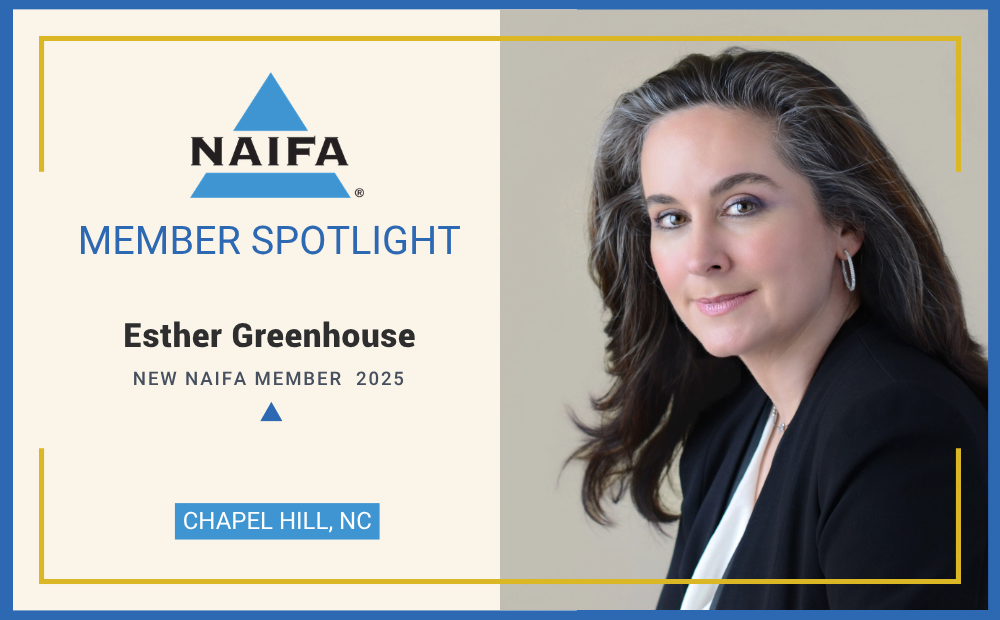
How Esther Greenhouse Is Helping Advisors Protect Clients Beyond the Portfolio
Esther Greenhouse, President of Silver to Gold Strategic Consulting, works at the intersection of aging, design, and financial security. Silver To Gold is a financial gerontology consultancy, a B2B firm providing expertise in aging to financial planning and long term care insurance firms so they can provide holistic planning and unique support to the generations. As an environmental gerontologist, Esther is an expert in the relationship between older adults and the built environment. For 30 years, she has been working with organizations to help them understand, and positively shape, how housing and community design directly affect long term care needs, family caregiving, and financial outcomes.
Her mission aligns closely with the work of financial professionals. Her expertise focuses on enabling people to maintain both physical and financial independence as they age, while also supporting the family caregivers who often carry the greatest burden.
A Personal Story That Shaped a Career
Greenhouse’s professional path began with a childhood experience that left a lasting impression.
When she was five years old, her maternal grandmother lived with the family. The home included features that supported aging in place, such as zero step entrances. However, when her grandmother’s rheumatoid arthritis progressed and she began using a walker, the bathroom doorway proved too narrow. That single design barrier combined with Esther’s mother’s demands caring for her own children and her mom was the tipping point– ultimately forcing her grandmother to leave the family home and move into a care facility.
The experience revealed a powerful truth. A home can either support independence or quietly erode it.
Years later, Greenhouse pursued studies in environmental psychology, human centered design, gerontology, and city and regional planning. She recognized that what happened to her grandmother was not inevitable. It was the result of environmental mismatch, or poor person/environment fit.
That insight became the foundation of her consulting work.
Real World Financial Impact
Greenhouse often shares another personal example in conversations with advisors and insurance professionals.
When her own mother’s health conditions were multiplying and began to impact her functioning, Greenhouse applied her unique Enabling Design Method to help her mother retain as much physical and financial independence as possible. The goal was to delay or prevent a move to institutional care. She succeeded. Her mother’s care trajectory was slowed, she was able to receive minimal informal and paid care within the home. Overall, the result was a seven-year delay in transitioning to a care facility, from the point at which her need for care began.
The estimated financial impact is $500,000 to $1.5 million in avoided long term care costs.
For financial advisors, that example reframes financial planning conversations. Where a person lives can meaningfully influence:
-
Long term care insurance claims
-
Asset preservation
-
Caregiver strain
-
Client quality of life
-
Legacy planning outcomes
Addressing environmental risk is not simply about home features. It is about retaining physical independence in order to retain financial independence, increasing the ability to protect retirement income streams and preserve wealth for future generations.
The Enabling Design Method
More than 15 years ago, Greenhouse developed what she calls the Enabling Design Method. It is built on three pillars that have direct relevance to financial planning conversations.
Person Environment Fit
When there is a good fit between an individual’s abilities and their environment, that person can function at a high level of independence. When environmental demands exceed personal abilities, a form of stress called environmental press occurs. This mismatch can artificially lower functioning and accelerate decline.
The Status Quo in Design
Virtually all homes and communities are unintentionally designed for individuals with high physical, cognitive, and sensory abilities. As people age, they are forced to adapt to spaces that were never designed with longevity in mind. This growing gap contributes to preventable frailty and artificially higher care needs. According to the Harvard JCHS, less than 5% of the nation’s housing stock has the key features necessary for successful aging in place. And yet 95% of older adults live at home, and the vast majority express a desire to remain there until the end of their lives.
Shifting Policy and Practice
The third pillar encourages organizations to review policies, programs, and economic strategies through the lens of person/environment fit. How might the built environment be artificially increasing care costs? How might it be driving financial withdrawals that could otherwise be avoided?
For advisors, this approach adds a new dimension to risk management.
Demographic Pressures and the Care Gap
Greenhouse also points to broader societal trends that intensify the urgency of this work.
Declining birth rates over several decades have resulted in a smaller caregiver base relative to the growing older population. At the same time, dual income households have reduced the availability of family members who can provide informal care. Many adult children live far from aging parents, limiting their ability to help with even basic tasks.
There is also increasing demand for long term care related to cognitive decline. More men are requiring care for longer periods due to cognitive conditions, further expanding the duration and cost of support.
In addition, changes to immigration policies are exacerbating a decades old paid caregiver shortage.
Amid these pressures, the built environment remains an overlooked and misunderstood factor. Where a client lives and how that home functions can significantly influence both care needs and financial outcomes.
A Unique Opportunity for Financial Advisors
Greenhouse believes financial advisors are uniquely positioned to lead these conversations.
Topics such as frailty, cognitive decline, and dependency are emotionally difficult for families, and for financial advisors to broach with clients. Even her own mother initially resisted early planning discussions. However, when framed in terms of asset protection, retirement planning, and legacy preservation, the conversation becomes more accessible to all parties.
Advisors are trusted professionals. They can provide resources and educate clients so environmental considerations are part of comprehensive retirement planning. This may include:
-
Planning renovations with aging in mind
-
Evaluating relocation options
-
Reducing potential caregiver burden
-
Protecting assets from premature and preventable depletion
Greenhouse’s firm has developed initiatives, including a program called The Retention Catalyst, to help advisory firms integrate these strategies into client engagement and training efforts. The objective is clear: Improve client outcomes while strengthening multi generational relationships.
Industry data consistently shows that a significant percentage of heirs (upwards of 70%) move their loved ones’ funds away from the current advisor upon inheritance or when taking over money management responsibilities. By proactively engaging adult children in conversations about aging, independence, and financial protection, advisors can reinforce trust across generations. By uniquely supporting and helping to reduce caregiving needs, advisors are also helping the adult children reduce the negative impacts on their own physical + financial wellbeing both today and in their own retirements as well.
Advocacy and Professional Collaboration
Greenhouse also emphasizes the value of professional associations that advocate for sound public policy and foster education within the industry. Advocacy is essential when legislative changes can directly impact long term care insurance, retirement security, and the ability of professionals to serve clients effectively.
Equally important is collaboration across disciplines. Financial planning does not exist in isolation. Advisors benefit from access to experts in related fields, including environmental design and aging research.
Amplifying the Advisor’s Impact
At its core, Greenhouse’s message is about expanding the advisor’s influence to protect clients and their families. Greenhouse shares “Financial professionals have so much expertise and impact…our work is to shine a light on a misunderstood driver of preventable long term care, needs, costs, and burdens. Thus amplifying advisors’ positive impact on older adults and their families.”
Financial professionals already play a critical role in protecting clients’ assets. By incorporating the built environment into planning discussions, they can also help protect clients’ independence, dignity, and family relationships.
The opportunity is significant. Small environmental decisions can alter the trajectory of aging, reduce preventable care costs, and preserve legacy assets.
For advisors committed to holistic planning, the built environment represents both a risk factor and a strategic advantage. When addressed thoughtfully, it becomes another powerful tool in delivering long term value to clients and their families.
If you’d like to learn more about Esther’s work:
Esther Greenhouse, President
Silver To Gold Strategic Consulting
https://silvertogoldstrategies.com/
Esther@S2Gold.com


.png?width=300&height=600&name=Tax%20Talk%20Graphic%20-%20email%20tower%20(300%20x%20600%20px).png)
